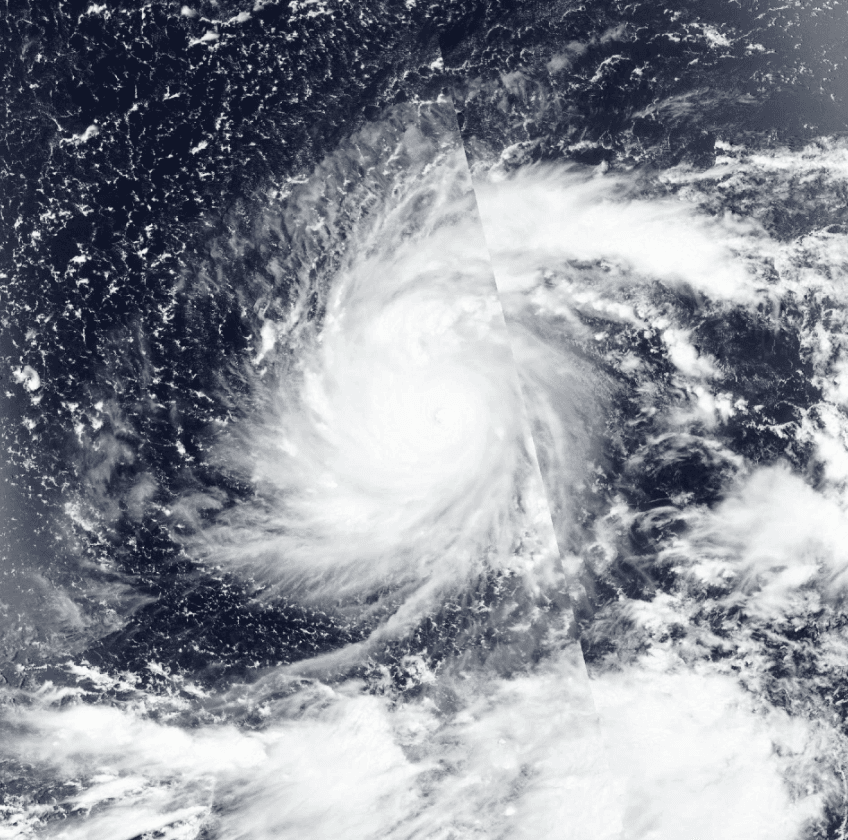
Recent developments in the 2026 Western North Pacific season, including landfalls by Maysak, Bavi, and Noul through late July, have established an early pace near historical norms of roughly seven annual strikes on China. Above-normal formation forecasts of 27–29 systems overall, driven by emerging El Niño conditions and a positive Indian Ocean Dipole, raise the prospect of elevated late-season activity from August through October when steering patterns and sea-surface temperatures most favor westward tracks toward the Chinese coast. Model consensus points to continued intensification potential, yet interannual variability in genesis locations and subtropical ridge positioning creates substantial uncertainty around exact landfall counts. With several months remaining, traders weigh these atmospheric dynamics against climatological baselines to differentiate outcomes clustered near eight.
Experimental AI-generated summary referencing Polymarket data. This is not trading advice and plays no role in how this market resolves. · UpdatedHow many tropical cyclones will make landfall in China during 2026?
How many tropical cyclones will make landfall in China during 2026?
8 39%
Greater than 8 38%
5 34%
6 34%
Fewer than 5
24%
5
34%
6
34%
7
33%
8
39%
Greater than 8
38%
8 39%
Greater than 8 38%
5 34%
6 34%
Fewer than 5
24%
5
34%
6
34%
7
33%
8
39%
Greater than 8
38%
All landfalling tropical cyclones listed by the CMA on that page count toward the total, regardless of their intensity category at landfall (tropical depression, tropical storm, severe tropical storm, typhoon, severe typhoon, or super typhoon). What constitutes a landfall in China (including which mainland and island locations qualify) is determined solely by the CMA's records on that page. Each tropical cyclone is counted once toward the total, regardless of how many separate times it makes landfall.
One bracket will resolve "Yes" and all others "No".
If the CMA "Landfalling TCs" page is inaccessible or the 2026 Best Track Dataset has not been updated by June 30, 2027, resolution will instead be based on the number of tropical cyclones reported by China as making landfall for the 2026 season - counted on the same all-intensity basis - in the ESCAP/WMO Typhoon Committee Annual Session final report for the 2026 season (https://www.typhooncommittee.org).
Market Opened: Aug 5, 2026, 2:44 PM ET
Resolution Source
https://tcdata.typhoon.org.cn/en/dlrdqx.htmlResolver
0x69c47De9D...All landfalling tropical cyclones listed by the CMA on that page count toward the total, regardless of their intensity category at landfall (tropical depression, tropical storm, severe tropical storm, typhoon, severe typhoon, or super typhoon). What constitutes a landfall in China (including which mainland and island locations qualify) is determined solely by the CMA's records on that page. Each tropical cyclone is counted once toward the total, regardless of how many separate times it makes landfall.
One bracket will resolve "Yes" and all others "No".
If the CMA "Landfalling TCs" page is inaccessible or the 2026 Best Track Dataset has not been updated by June 30, 2027, resolution will instead be based on the number of tropical cyclones reported by China as making landfall for the 2026 season - counted on the same all-intensity basis - in the ESCAP/WMO Typhoon Committee Annual Session final report for the 2026 season (https://www.typhooncommittee.org).
Resolution Source
https://tcdata.typhoon.org.cn/en/dlrdqx.htmlResolver
0x69c47De9D...Recent developments in the 2026 Western North Pacific season, including landfalls by Maysak, Bavi, and Noul through late July, have established an early pace near historical norms of roughly seven annual strikes on China. Above-normal formation forecasts of 27–29 systems overall, driven by emerging El Niño conditions and a positive Indian Ocean Dipole, raise the prospect of elevated late-season activity from August through October when steering patterns and sea-surface temperatures most favor westward tracks toward the Chinese coast. Model consensus points to continued intensification potential, yet interannual variability in genesis locations and subtropical ridge positioning creates substantial uncertainty around exact landfall counts. With several months remaining, traders weigh these atmospheric dynamics against climatological baselines to differentiate outcomes clustered near eight.
Experimental AI-generated summary referencing Polymarket data. This is not trading advice and plays no role in how this market resolves. · Updated
Beware of external links.
Beware of external links.
Frequently Asked Questions